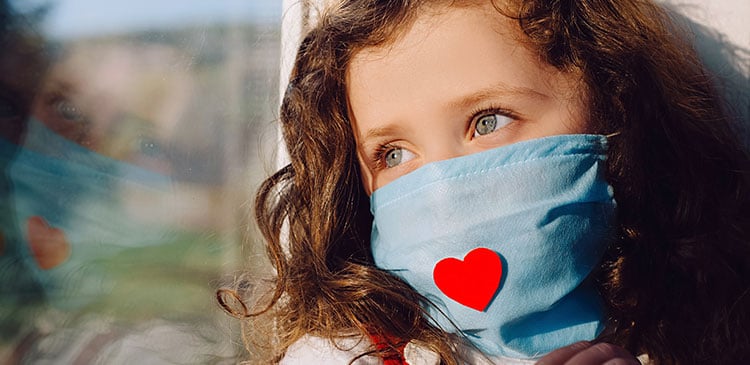
A young person with autism may not be able to tolerate face masks.
Their neurology can make them more sensitive than other people to touch and texture, and many cannot bear the feeling of having their nose and mouth covered by fabric.
Although big changes, such as mandatory mask-wearing, are hard for many, they can be traumatic for autistic people.
Consider the factors that may make masks intolerable or inadvisable for a young person with autism:
- Anxiety: A mask doesn’t block breathing, but it does change the feeling of one’s airflow. For some autistic people, this can feel like suffocation.
- Sensory: Some can’t stand having anything covering their face.
Some can’t bear the feeling of mask elastics pulling on their ears. (One enterprising mom fixed the latter issue by sewing buttons on her son’s favorite hat and pulling the elastics around those instead.)
- Visibility: If your child wears glasses, masks may fog them up. There are fixes, such as tucking a tissue between the mask and the bridge of your nose or changing your breathing pattern, but these solutions may not work for people with sensory issues or developmental disabilities.
- Smell: Young people with autism can be extra sensitive to smell, so be sure your child brushes their teeth before trying on a mask.
- Epilepsy: A significant percentage of young people with autism have seizure disorders. Not being able to see an epileptic child’s face can be a safety risk if they have distinctive pre-seizure facial expressions. Masks with clear sections over the mouth, developed to aid deaf people, may be an option.
Tips for managing masks and young autistic people:
We have collected these tips and trips from parents, carers and autism organisations:
- Use visuals and social stories to explain why people need to wear masks
- Give them choices. Let the young person with autism choose the fabric or the pattern that the mask is made of if you will be using a fabric one.
A mum of an autistic teen son said they are having fun with matching Spider-Man masks and gloves.
- Model mask-wearing. Demonstrate using the face mask on a preferred object or person, such as a stuffed animal, a doll, or a family member.
- Make the masks available. Leave the masks out in plain sight, so that they can try it any time they want.
- Practice at home. Start by wearing the mask at home for a short periods of time. Use a visual timer during practice.
A young autistic woman told us she can only just bear a mask if its loose over her nose and mouth.
- Plan short initial outings. Make the first outings with a mask low-stress, low demand environments.
Use a printed photo or digital photo of the individual wearing a face mask as a visual cue to wear the mask before outings. The photo can be stored close to the door or on a tablet that is easily accessible.
- Don’t rush things. Take the time you need to develop a positive routine with masks.
- Try to remove stress around the need to wear a mask. Mask-wearing should be paired with access to fun places and things initially. It should not be a source of stress.
- Be supportive. Praise all attempts, successful or not. Provide rewards like a preferred activity, a special treat, or tickles and hugs for tolerating short durations.
- Chew gum or suck on a hard candy while wearing a mask, for distraction and to improve the smell of recycled air beneath the mask.
Tools to assist you to support a young person with autism
We have collected the following tools to help explain mask-wearing
- How to wear a mask properly - an easy to understand guide to assist community members
- People Wearing Masks - A Social Story (Aspect)
- Wearing a mask - A social story (Asert)
- Storybooks for children with autism - picture storybooks that explain topics like Coronavirus, wearing masks, social distancing.
- An animated story video on wearing a mask
Source: An Animated Social Story
Credits
- Washington Post: Some autistic people can't tolerate masks...
- Autism Spectrum: Tips for Wearing Masks
- Wearing a Mask - A Social Story
- How to wear a face mask correctly
MyCareSpace resources may be shared provided they are credited to MyCareSpace with backlinks to the original resource.